By the CieloGrid Weather Team3 min read
In this guide
Thunderstorms bring some of the most dramatic weather on Earth: torrential rain, hail, damaging winds and lightning. In India, lightning is one of the deadliest natural hazards, killing well over a thousand people in many years, many of them farm workers caught in the open during pre-monsoon and monsoon storms. Almost all of these deaths are preventable with simple precautions.
How a thunderstorm forms
Thunderstorms need three ingredients:
- Moisture in the lower atmosphere, which provides the fuel.
- Instability — warm, moist air near the ground with cooler air above, so rising air keeps accelerating upwards.
- A trigger that starts the air rising, such as daytime heating, hills and mountains, sea breezes or an approaching weather system.
As the air rises, its moisture condenses into a towering cumulonimbus cloud that can reach 12–15 km high. Inside, ice crystals and soft hail (graupel) collide in strong updrafts, separating electrical charges. When the charge difference becomes large enough, it discharges as lightning, heating the air around the channel to around 30,000 °C. The air expands explosively, which we hear as thunder.
Why lightning is dangerous even before the rain
Lightning can strike 10 km or more from the storm that produces it — often from a patch of seemingly clear sky ahead of the rain. Many victims are struck before the storm arrives or after the rain has stopped, while the storm is still within range.
You can estimate the distance of a strike by counting the seconds between the flash and the thunder: sound travels about 1 km every 3 seconds. But the simplest and safest rule is this:
Stay inside until 30 minutes after the last thunder you hear.
Where is safe — and where isn't
Safe shelter:
- A substantial, enclosed building with wiring and plumbing. Stay away from windows and doors, and avoid using corded phones, plugged-in electronics, taps and showers during the storm.
- A hard-topped metal vehicle (car, bus, truck) with the windows closed. The metal body carries the current around you; avoid touching metal parts inside.
Not safe:
- Open fields, rooftops, hilltops and beaches
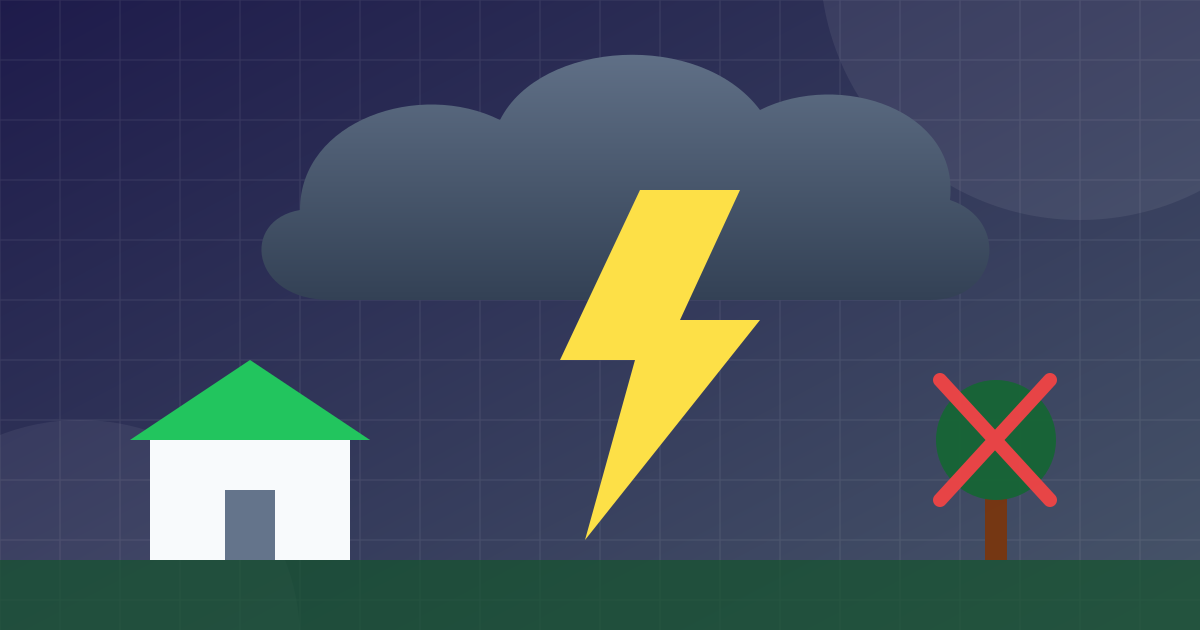
- Under isolated trees — the most dangerous place for many rural victims
- Tents, open sheds, bus shelters, huts and small open-sided structures
- Near water, wire fences, metal poles or tall isolated objects
- Two-wheelers, bicycles and open tractors
If you are caught outdoors with no shelter
There is no safe place outside during a thunderstorm, but you can reduce the risk:
- Move away from high ground, water and isolated tall objects immediately.
- Do not lie flat — ground current spreads across wet soil.
- If you are in a group, spread out at least a few metres apart so one strike cannot injure everyone.
- Keep moving towards a safe building or vehicle rather than waiting in the open.
Other thunderstorm hazards
Lightning is only one danger. Thunderstorms can also bring sudden strong gusts (squalls and downbursts) that topple trees and hoardings, hail that damages crops and vehicles, and intense rain that causes flash flooding. In north and east India, pre-monsoon storms are often called nor'westers or kalbaishakhi and can arrive with very little warning.
If someone is struck
Lightning victims do not carry an electrical charge and are safe to touch. Call your emergency number (112 in India) immediately. If the person is not breathing or has no pulse, start CPR if you are trained — prompt resuscitation saves many lightning victims.
Common myths
- "Lightning never strikes the same place twice." False. Tall structures are struck many times a year.
- "Rubber tyres protect you in a car." False. It is the metal body, not the tyres, that protects you.
- "If it isn't raining, there's no danger." False. Lightning can strike far from the rain.
Key takeaways
- When thunder roars, go indoors, and wait 30 minutes after the last thunder.
- Shelter in a solid building or a hard-topped vehicle — never under a tree.
- Lightning can strike 10 km or more from a storm, before and after the rain.
- Lightning victims are safe to touch; call for help and start CPR if needed.
Frequently asked questions
What is the 30-minute rule for lightning?
After you hear the last thunder, wait at least 30 minutes before going back outside. Storms that are moving away can still produce lightning strikes many kilometres behind them.
Is it safe to stand under a tree during lightning?
No. Isolated trees are among the most dangerous places in a thunderstorm because lightning often strikes the tallest object, and the current can jump to people nearby.
How far away can lightning strike?
Lightning can strike 10 km or more from the storm that produces it. If you can hear thunder, you are within striking distance.
This guide is general information, not a substitute for official warnings. For severe weather, always follow your national meteorological service and local authorities.